
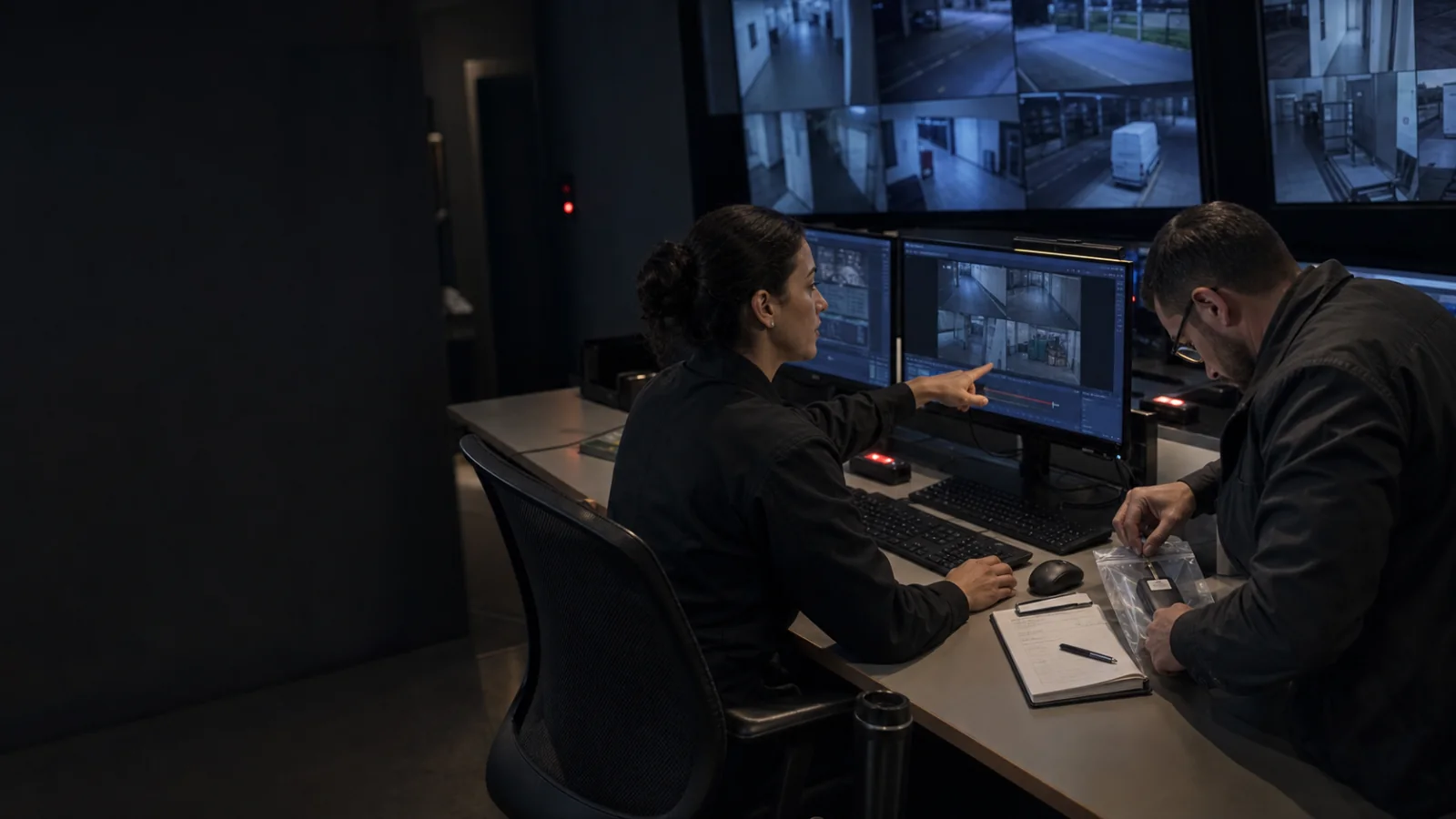
Effective CCTV operation combines lawful monitoring, active observation, accurate time references, disciplined communication and controlled evidence handling. Cameras do not create security on their own; trained people and clear response procedures do.
01
Design camera tours around risk
Operators should understand the site, vulnerable areas, normal patterns and the events that require closer attention. Camera tours and priority views help avoid a purely reactive approach.
02
Build a clean incident chronology
Accurate timestamps, subject descriptions, camera references, radio calls and actions create a usable account. Notes should distinguish what the operator directly observed from information received from someone else.
- Synchronise system and log times
- Use clear camera and location names
- Record handovers and evidence exports
- Protect access to recorded material
03
Connect detection to response
The control room must know who can act: a site officer, manager, maintenance team or emergency service. Escalation thresholds should be explicit enough to support decisions at 3am.
This article provides general operational information, not legal or regulatory advice. Check current official guidance and assess the specific premises, event or role.