
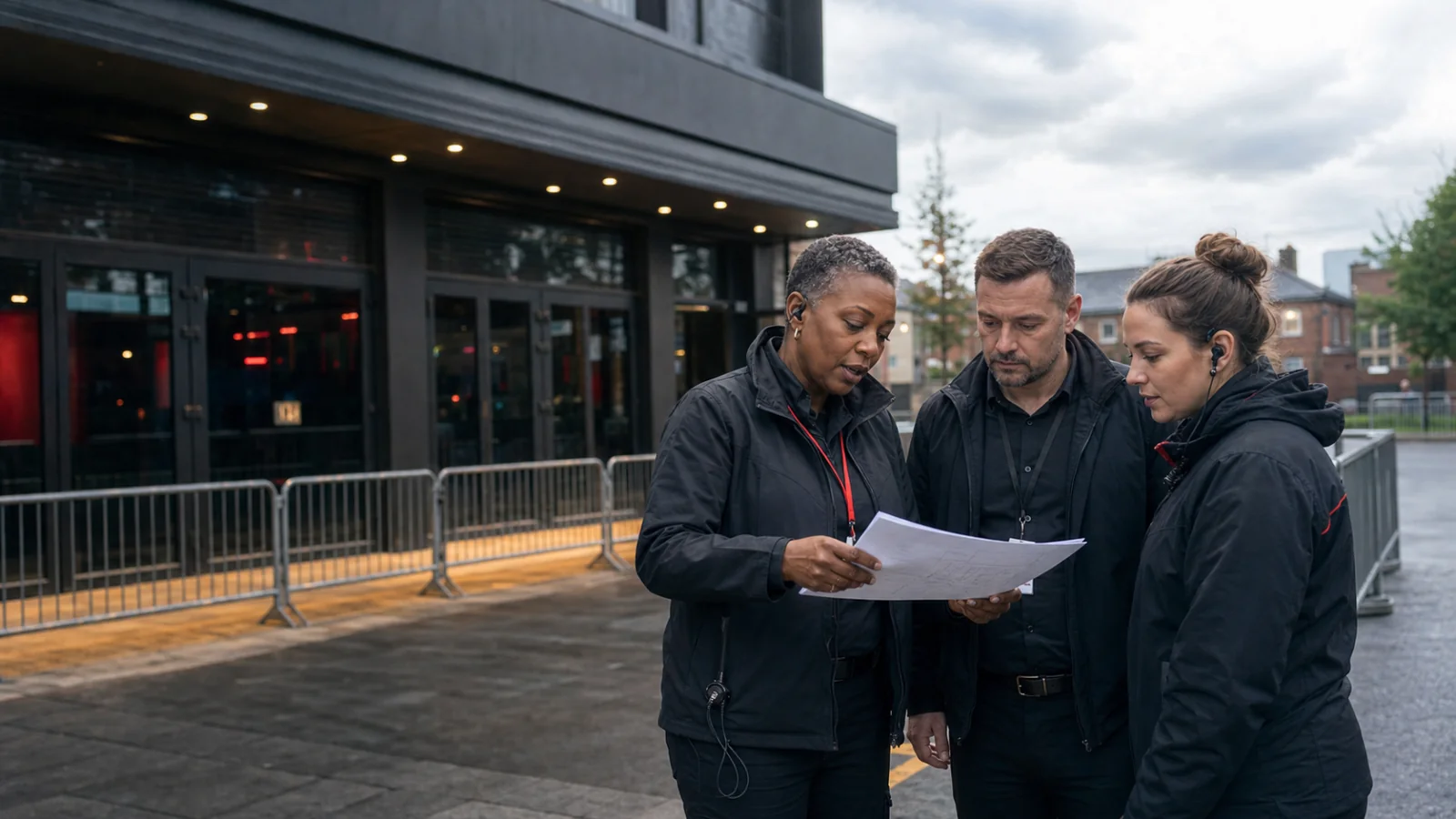
The Terrorism (Protection of Premises) Act creates a stronger legal framework for how qualifying premises and events prepare for terrorist attack. The right response is not a generic security package; it is a proportionate plan, trained people and procedures that work under pressure.
01
Start with the premises or event duty
Organisations should first establish whether a premises or event falls within the legislation and which requirements apply. Capacity, use, control and event arrangements matter. Legal guidance should be checked against the current government position rather than relying on a marketing summary.
Security providers can support the operational work, but the responsible person should retain clear ownership of compliance, records and decision making.
02
Turn policy into practical actions
A useful protective-security plan tells staff what to notice, how to communicate, when to move people, who takes control and how emergency services gain access. It must reflect the real building or event, including public entrances, staff doors, delivery areas and places where crowds form.
- Confirm command, communication and escalation roles
- Review ingress, egress, evacuation and invacuation
- Brief temporary staff and contractors
- Exercise the plan and record improvements
03
Security staffing is only one control
Licensed officers, stewards and control-room operators can be important, but they work best as part of a layered system. Layout, information, training, access rules, housekeeping and good management decisions can be just as significant.
This article provides general operational information, not legal or regulatory advice. Check current official guidance and assess the specific premises, event or role.