
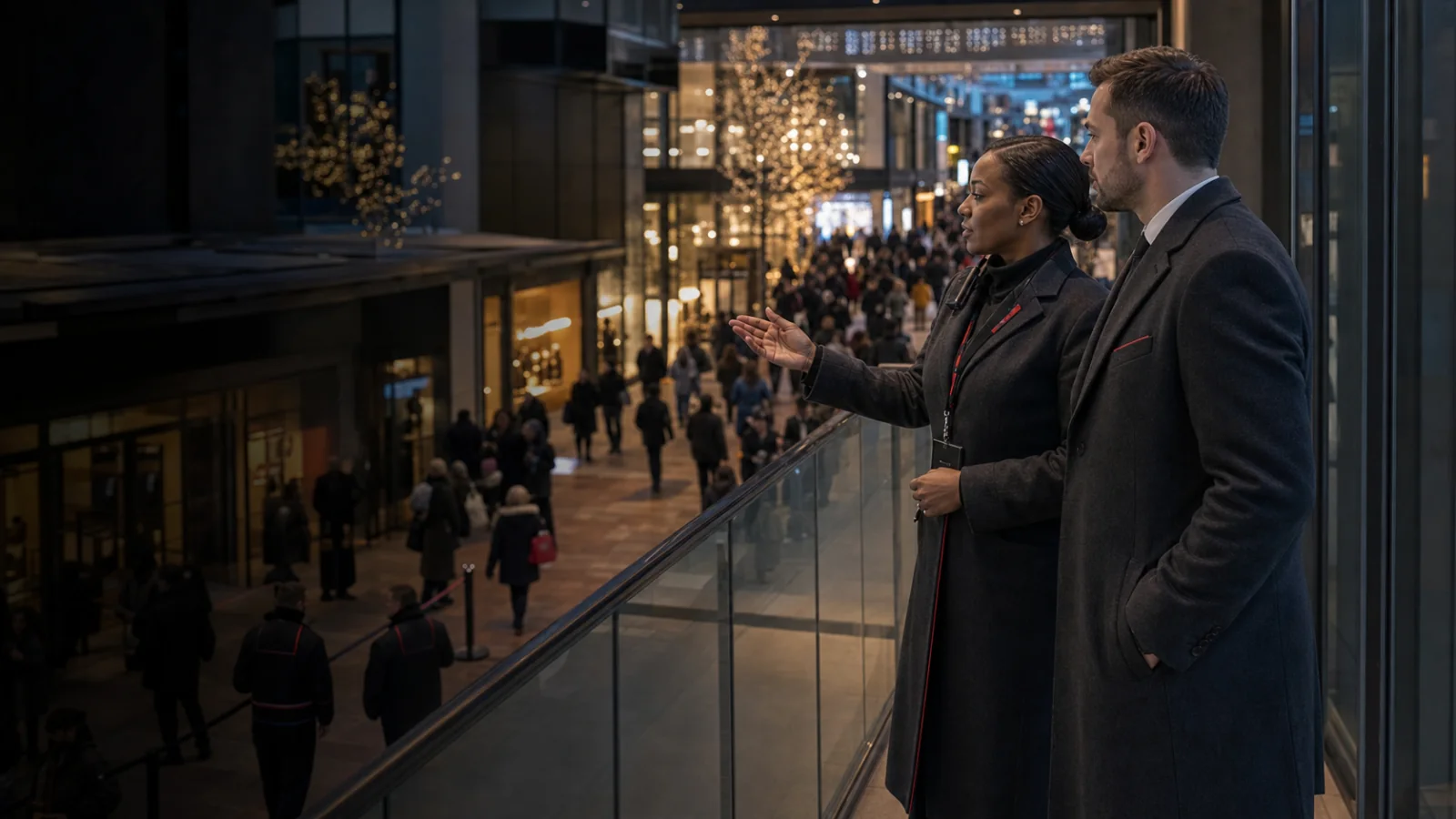
Peak trading changes the risk picture: footfall rises, temporary staff join, queues grow and normal routines are placed under pressure. Retail security works best when staffing and store procedures are planned together before the busiest weeks begin.
01
Use incident data to place people
Deploying an officer at the same door every day may be visible, but it is not automatically effective. Review when incidents happen, which products and routes are targeted, where staff feel exposed and when CCTV coverage or management presence is weakest.
02
Connect the floor, control room and manager
Radio language, observation standards and escalation thresholds should be agreed. Store teams need to know what security can do, what evidence to preserve and when safety takes priority over recovery.
- Brief temporary staff on suspicious behaviour and reporting
- Check cameras, clocks and evidence-export procedures
- Agree safe intervention and non-intervention rules
- Review opening, closing and cash-movement routines
03
Measure more than arrests
Deterrence, faster reporting, staff reassurance, prevented access and stronger evidence are meaningful outcomes. A good review looks at patterns and operational learning, not only dramatic incidents.
This article provides general operational information, not legal or regulatory advice. Check current official guidance and assess the specific premises, event or role.